He Wants to Me Drunk Again in Spanish
Looking to have a huge caput start when y'all travel to Mexico?
Yous've gotta learn the slang.
In this mail, I'm going to requite you lot a brief introduction to the land's unique version of Castilian—and by the time nosotros're done, y'all'll be able to understand a slang-filled conversation between ii Mexicans.
Contents
- Some Basic Information on Mexican Spanish
- Resources for Learning Mexican Slang
-
- "Quick Guide to Mexican Slang"
- FluentU
- "Mexislang"
- Na'atik Language and Civilization Institute
- Mexican Spanish Slang Near… My Parents?
-
- 1. ¡Qué padre!
- 2. Me vale madre
- 3. Poca madre
- Mexican Slang for Food and Potable
-
- iv. Fresa
- 5. ¡Aguas!
- 6. El bote
- 7. Estar crudo
- eight. ¡A huevo!
- Mexican Slang Near People
-
- 9. Chilango
- ten. Te crees muy muy
- 11. Ese
- 12. Metiche
- xiii. Pocho / Pocha
- 14. Naco
- 15. cholo
- sixteen. Güey/Vato
- 17. Carnal
- Mexican Slang for Casual Conversations
-
- xviii. ¿Neta?
- 19. Eso que ni que
- 20. Ahorita
- 21. Ni modo
- 22. No hay tos
- 23. Sale
- Mexican Slang About Money
-
- 24. Coda / Codo
- 25. Tener feria
- Mexican Feel-good Slang
-
- 26. Buena onda
- 27. ¿Qué onda?
- 28. ¡Viva México!
- "Street" Slang, a.k.a. Rude and Swear Words
-
- 29. Pendejo
- xxx. Cabrón
- 31. Pedo
- 32. Pinche
- 33. Verga
- 34. Chingar
- Other Classic Mexican Castilian Slang Phrases
-
- 35. ¡No manches! / ¡No mames!
- 36. Está cañón
- 37. Chido
- 38. Chulo
- 39. ¿A poco?
- 40. ¡Órale!
- 41. Chela
- 42. la tira
- 43. ¿Mande?
- Sample Slangy Mexican Spanish Chat
Download: This weblog post is available every bit a convenient and portable PDF that yous tin can take anywhere. Click here to get a copy. (Download)
Some Basic Information on Mexican Spanish
Hither's the good news: If you began learning Spanish in school somewhere in the United states of america, Mexican Spanish is most probable the style y'all're already familiar with.
But if yous're from another part of the world or have just been studying independently, here's what you lot need to know:
- In Mexican Spanish, the pronoun t ú is used for the second-person familiar form. This means that Mexicans apply tú as the singular "yous" in breezy settings, such every bit with friends or family unit. This is opposed to the pronoun vos that's used in parts of Central and South America.
- As in the rest of Latin America, the pronoun vosotros isn't used in Mexican Spanish. If you've been learning the variety of Spanish spoken in Spain, you lot've come to know vosotros as the familiar mode to say "y'all" when referring to a group of people. In Mexican Spanish, this course is never used. Mexicans use ustedes even in breezy settings.
- Mexican Castilian features more than loanwords from English than other national dialects. In Mexico, what you do in your spare time isn't a pasatiempo but rather a hobby (pronounced with the English "h" sound!). A reality television show is merely a reality. If yous're trying out a new fashion, you might be asked about your nuevo look… and the list goes on.
This phenomenon is due in large part to Mexico's proximity to the United States and the historic move of citizens between the ii countries.
Resources for Learning Mexican Slang
"Quick Guide to Mexican Slang"

The "Quick Guide to Mexican Slang" is a meaty book that's an ideal take-along resource. It's filled with definitions, case sentences, online links for further study and lots of relevant data about Mexican Spanish.
There are more than 500 words and phrases included in this book. Many slangy words, both erstwhile and new, are covered. It's a great mode to brush up on the essentials!
FluentU

FluentU uses authentic videos from different Spanish-speaking locations with interactive subtitles to help yous learn. This allows you to sentinel and listen to real Spanish as native speakers use it, and there'due south plenty of content from Mexico.
Videos are accompanied by accurate subtitles in Castilian and English and you can hover over any word as the video plays to see its definition and more than data near it. You can also create flashcards from new words you come across, then study them with personalized quizzes.
Content is categorized by skill level, format and topic, and you can search for central words or vocabulary words to detect content that suits your learning goals and interests.
"Mexislang"
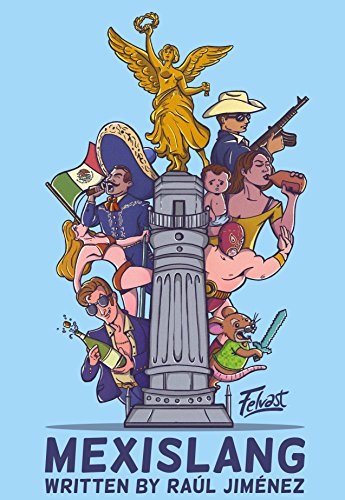
"Mexislang" is the stop result of a blog that was intended to teach readers about Mexican slang. Information technology offers insight into the history of slang expressions. Additionally, there are tips for how to use each slangy discussion or phrase.
This is a useful guide for anyone who plans to spend some fourth dimension in Mexico, perhaps on an extended visit. It's also just interesting reading for language lovers!
Na'atik Language and Culture Institute

Serious students of Mexican Spanish volition discover exactly what they're looking for with this Mexican language school, which offers immersive programs in both Maya and Castilian.
The selection to stay with Mexican families to immerse in the language is a great way to larn about culture—including slang! Just if you lot're not up for traveling, courses are also bachelor in online ane-on-one or small group format. Online classes focus on grammar and conversational skills, so you're sure to pick up plenty of slang along the way.
Also, they have a fantastic blog that's both informative and entertaining. History, civilization, Mexican Spanish, news of the day and much more is extensively portrayed!
Got it? Now that nosotros've got the basics out of the way, information technology's time to get to the center of the matter. Allow's take a look at a few prominent themes running throughout Mexican Spanish slang.
Mexican Spanish Slang About… My Parents?

Padre (male parent) and madre (female parent) are two pop words used in a diversity of Mexican Spanish slang phrases. In what seems to be a direct connection to the "machismo" that has historically pervaded Mexican culture, we tin can generally empathize padre to exist a positive word and madre to be a negative ane.
Confused? Permit's look at some examples:
1. ¡Qué padre!
This phrase's literal translation, "How father!", doesn't make much sense at all—which will, of course, become a running theme in an commodity on slang.
That said, it tin be understood to mean "Cool!" or "Awesome!" and is without a doubtfulness one of the almost normally used phrases punctuating day-to-day Mexican Spanish.
2. Me vale madre
Translated literally as, "It'southward worth a mother to me," this phrase is used to say "I don't care" or "It doesn't thing to me at all." It's not quite a expletive, but it can be considered offensive in more formal situations.
3. Poca madre
Literally translated as "footling mother," this is sort of an inversion of the "female parent" theme. Considering it's only a little bit female parent, this phrase is used to describe something really cool. Once again, this phrase can exist considered offensive and is mostly used amidst groups of young men.
Though every Mexican has a unlike take on things, the gender-loaded nature of these slang phrases is get-go to come under a fleck of scrutiny in modern Mexico.
The use of padre is more often than not fine, just many women (and some men) practice have offense at the negative utilize of the word madre and its linguistic relatives. It'south good to sympathise how the word is used, but it's probably best to avoid using information technology yourself.
Mexican Slang for Food and Drink
Mexican Spanish slang uses several words commonly related to food and potable to mean other things entirely.
4. Fresa
Literally a "strawberry," a fresa is not something you desire to exist.
Somewhat similar to the give-and-take "preppy" in the United States merely fifty-fifty more negative in its connotations, a fresa is a immature person from a wealthy family unit who's self-centered, superficial and materialistic.
v. ¡Aguas!
This phrase is used throughout Mexico to hateful "Be careful!" or "Look out!" Literally meaning "waters," it's possible that this usage evolved from housewives throwing buckets of h2o to clean the sidewalks in front end of their homes.
six. El bote
The wordboteways "tin" (as in "a tin of soda"). Nevertheless, when a Mexican says someone is"en el bote,"they mean someone is "in the slammer," "in jail."
7. Estar crudo
Estar crudomeans "to be raw," as in "food that hasn't been cooked." However, if someone in Mexico tells you they're crudo, it means they're hungover because they've drunk likewise much alcohol.
viii. ¡A huevo!
Huevos (eggs), it must be said, make upwardly an entire family unit of Mexican Spanish slang. They're often used to denote a specific office of the male anatomy—yous can probably guess which—and they're also used in a broad diverseness of slang phrases.
¡A huevo! is perhaps the most popular one, and information technology's basically a vulgar manner to evidence excitement or approval. Call up "Eff aye!" without the cocky-censorship.
Mexican Slang About People
9. Chilango
This slang term means something, usually a person, who comes from Mexico City. Calling someone a chilango is saying that they're representative of the culture of the metropolis.
There's ambivalence surrounding this expression. Many slang terms aren't clear-cut, and this is an example of that issue. While some say it applies to those born in Mexico City, while others insist it's a term for those who move to the metropolis. The "Mexico Daily News" explains it from every side—and there'due south all the same a scrap of mystery virtually the term.
However ane arrives in the city seems inconsequential. The fact remains that the slangy term refers to those who phone call the beautiful uppercase their home.
10. Te crees muy muy
This literally ways "You lot remember you're very very" only the slang pregnant is more of "You think you're something special."
Often, this is used to power down someone who's boastful or thinks they're better than anyone else. It'due south a take-down that isn't insulting.
Or, if someone thinks they're doing something incredibly well—and they make information technology clear that no 1 else tin can come close to their perfection—a person might hear "Te crees muy muy."
11. Ese
I was very surprised to see that in that location are a ton of Spanish learners who ask the question, "What do gangsters call each other in Mexico?"
Well, long story curt, they call each otherese.
In the 1960'southward, a well-known Mexican gang called the Sureños("Southerners") arrived in California. It's said that members of this gang chosen each other by merely the outset letter of the gang name: "S," pronounced "ese" in Spanish. The term stuck and the give-and-take (or rather, letter), has remained in the linguistic communication ever since.
Nonetheless, in the '80s, the discussion esestarted to be used to refer to men in full general.
Remember we have the demonstrative ese ("that one") in Spanish. It'due south very possible that the esefromSureñosgot mixed with theesein expressions similarese vato ("that guy"), and from that, the give-and-takeese started to be used to refer to a man.
So, if you hear,"¿Qué pedo, ese?"somewhere in Mexico, but know they're saying "What up, dawg?"
12. Metiche
Metiche is a slang word for someone who loves to get the scoop on everyone'southward everything. It'due south a person who makes it his business organisation to find out everyone else'south business.
The metiche isn't usually a blabbermouth—just a person with an urgent need to know. Some people would refer to this sort of person every bit a busybody!
xiii. Pocho / Pocha
This Mexican slang term refers to a Mexican who'due south left Mexico or someone who's perhaps forgotten their Mexican roots or heritage.
This is ane of those two-sided slang words. In some instances, it can exist used equally just an observatory expression. In that case, information technology may mean that a generation isn't as culturally observant equally a previous generation. I've heard grandchildren use this term when trying to explain to a grandmother why ownership tortillas is simpler than making them the old-school mode.
But this can besides exist a derogatory slang give-and-take if information technology'south used to point out that someone's at fault for not remembering their heritage.
So information technology's best to consider the context when contemplating using this slang term. Or if you hear it in conversation, remember that it has more than one meaning.
14. Naco
Naco is a pejorative word y'all'd use in Mexico to describesomeone or something poorly educated and awkward. The closest American equivalent would be "tacky" or "ghetto."
Anaco is considered to have bad sense of taste and be classless. Though it'due south starting to become reclaimed by modern Mexican culture, the word has its origins in insulting indigenous and poor people, so many still discover it offensive. Exist careful with this give-and-take!
xv. cholo
Although the wordcholocan refer to different people and can accept several meanings (some more derogatory than others), information technology often refers to Mexican gangsters, especially Mexican American teens and youngsters who are in a street gang.
In South America, the term is actually used to mean something completely different: a person of indigenous descent. Latino USA has some interesting interviews with the two types of cholos, if you're curious to learn more.
sixteen. Güey/Vato
I've also seen this ane written every bit wey and even buey in older sources, simply information technology's generally accepted that güey is the way to go. No matter how you lot write it, information technology'due south basically pronounced like the English language give-and-take "mode" and it's one of the most quintessential Mexican slang words.
Originally used to mean "a stupid person," the word eventually morphed into a term of endearment similar to the English "dude." It's as well one of those strange words that tin can be used to insult a friend in an endearing manner if yous've seen them exercise something silly or stupid.
The aforementioned can exist said about the word vato(and alsobato, both spellings are correct). In the northern parts of United mexican states, you can use it to refer to someone equally "dude," "homie" or "bro."
Being the shortened form of the discussion chivato("snitch," "informant"), vato is quite frequently associated with a "bad-guy vibe" kind of meaning, then information technology can be used to refer to someone in a derogatory style.
When used to refer to a woman, a vata tin can only be a "chick," or she can be a female prostitute who owes someone money.
In other words, when in doubtfulness, employ güey. It's understood throughout United mexican states!
17. Lecherous
Carnalcomes from Spanishcarne(meat). Information technology's maybe for this reason that carnalis used to describe a close friend who's like a brother to y'all, carne de tu carneor mankind of your flesh.
If you lot say someone is yourcarnal, they're like part of the family unit.
Mexican Slang for Coincidental Conversations

xviii. ¿Neta?
"Truth?" or "Actually?" is what someone'south saying when they utilise this little word. Information technology'south so commonplace that I've heard toddlers use it!
This is a pop conversational interjection. It's used to fill a lull in the chatter or to requite someone the opportunity to come clean on an exaggeration. Oftentimes, though, information technology'southward just said to limited agreement with the last comment in a chat.
It tin as well be a way to clarify something. If confirmation of a point is needed, ¿Neta? is the expression to use.
19. Eso que ni que
At that place's no existent literal translation of this expression that makes whatsoever sense in English. Merely as Mexican slang, this convenient piddling phrase ways that you're in agreement with whatever'south being discussed, that at that place'south no incertitude nearly it. It'due south another conversational gem that can be useful as a filler expression.
So if someone expresses an opinion that's similar to your own or proposes an arrangement or activity equally a worthwhile endeavor, you lot tin say "Eso que ni que" to show that yous agree.
xx. Ahorita
This translates every bit "picayune at present" but the small word means correct now, or at this very moment.
If someone asks if y'all're set up to exit, ahorita is an advisable reply.
When do y'all want your dinner? "Ahorita."
Also, information technology's possible to say ahorita even when you're not quite meaning correct this very minute. For instance, if you lot're just a few minutes from existence set to walk out the door merely the person who's waiting for y'all is a tad impatient, sweetly calling "¡Ahorita!" from the other room might gain you a few extra minutes!
21. Ni modo
Ni modo, which can be literally translated as "not way" or "either way," is peradventure one of the most popular Mexican expressions, and I'one thousand certain you lot'll start adding it to your convos pretty presently.
Ni modois generally used to basically say "eh, whatever" or "it is what it is." It'south a bit fat "oh well"!
The phrase is used to show that you're resigned to whatever is happening or being said.
For example, if your partner breaks up with you lot, your carnaltin tell you, "Ni modo, hay mejores chicas/chicos en el mundo" ("Oh well, there are better girls/guys in the world").
You tin can even add together the wordya("already") to give emphasis to what you're saying, "Olvidé mis libros. Ya ni modo, ahorita voy por ellos" ("I forgot my books. Oh well, I'll get go them in a sec").
Ni modocan also exist used withque(that) and a present subjunctive to say you can't do something at the moment or at that place's no way you'd do it. It's like saying "at that place's no way" or "are you nuts?" in English language.
If it's midnight and your phone rings but you lot don't experience like talking, y'all can say, "Ni modo que conteste, güey"("There's no way I'one thousand answering, man").
22. No hay tos
I discovered this Mexican expression while doing research for another mail, and now I'm on a mission to teach everyone what it means and how to use information technology. Even outside of Mexico!
No hay tosliterally ways "there'southward no cough," but it's used to say "no trouble" or "don't worry virtually information technology."
As an expression, it makes no sense until you think of a doctor-patient state of affairs. The md says: "If there's no cough, yous don't have to worry." At that place you lot accept information technology! No coughing = No worries!
Imagine a situation where your friend asks for a few coins to buy something to eat but you have no money at the moment. He asks, "¿Tienes feria?("Practise y'all accept any money?"—See number 25 for more than almost feria), just y'all accept goose egg, so he tells you, "No hay tos, comeré en la casa"("No problem, I'll eat at abode").
23. Sale
Auctionis the tertiary person singular of the present indicative of the verbsalir("to exit"). In other words, information technology ways "he/she/it goes out."
Nonetheless, y'all tin can employ it in Mexico to say much more than than just that.
Y'all may accept heard the expressions vale(from the verbvaler — to price, to be worth) or dale(for the verbdar — to requite), both pregnant "OK," "sure," "aye" or "permit's do information technology."
Saleis just their Mexican counterpart, so it'southward normally used in situations when someone suggests doing something and you concord.
For example, if your best friend asks y'all to go to a concert with them, you can say,"Auction, pero tendrás que prestarme lana"("Sure, merely you'll have to lend me some money").
Auction can likewise be used as a question tag when y'all want to know someone's opinion or want to see if they're on the same page you are:"Ya vámonos, ¿sale?"("Let'due south go already, shall we?").
Mexican Slang Near Money

24. Coda / Codo
Codo literally ways "elbow" in English merely Mexican slang has turned information technology into a term used to describe someone who's cheap. It tin can exist applied to either gender, so pay attention to the -a or -o ending of this descriptive noun.
If you're spotted in public being tight-fisted or uncommonly frugal in the market, you might hear this word!
25. Tener feria
Feria means "fair" so the literal translation of this expression is "to have or be fair." Nevertheless, feria also refers to coins when information technology's used in Mexico. So, the phrase basically means "to have coin" or "to have pocket change."
If y'all're able to go have fun with your friends without having to have a loan or plead poverty, y'all tin answer in the affirmative if you're asked, "¿Tienes feria?" ("Do you have money?").
The amount of money is modest but the intention to take fun is large when this little phrase is passed around!
Mexican Feel-good Slang

26. Buena onda
Buena onda literally translates to "good wave" but information technology's used every bit a slangy expression to bespeak that there are good vibes or a skilful energy present.
I accept to admit, this is my favorite Mexican slang expression. Use it to arm-twist more smiles and good vibes than almost whatever other give-and-take in my vocabulary! Try it—you'll run across what I hateful!
27. ¿Qué onda?
This slangy Mexican expression translates to "What wave?" merely is a cool mode to enquire "What's up?"
It's similar to buena onda since the wave is mentioned once more! It's another experience-good, coincidental conversational expression that actually adds a lot of skillful feelings to whatsoever chat.
28. ¡Viva México!
Cultural love is evident across the globe and Mexicans have no shortage of pride in their beautiful country.
¡Viva México! literally means "Long alive Mexico!" Information technology'south the unifying phrase that applies to everything Mexican. It's a way of saying that the country should grow, prosper and see happy times for its citizens and visitors. It's often shortened to "¡Viva!" which means the same as the total phrase.
Visitors and citizens alike can use this sweet bit of slang—it's welcome everywhere in Mexico and will certainly bring favorable reactions!
"Street" Slang, a.k.a. Rude and Swear Words

WARNING! The following words can exist considered rude by many people. Some of them are swear words. Delight, bear in mind they tin can audio very impolite in some contexts, and so use them with caution. If you prefer to keep things make clean, just skip this section, por favor.
29. P endejo
Pendejo is one of those magical words that appear in almost every Castilian diversity but accept a different meaning depending on where you are.
Originally, the give-and-take was used to refer to your pilus down there. No wonder it was and then easy for information technology to get all kinds of weird meanings and connotations.
When you use information technology in Mexico, it has a rather rude meaning: "unpleasant or stupid person," "jerk."
Information technology's one of those words you tin can use with friends in an endearing way but too with other people when y'all're trying to be offensive.
It all depends on the way you use it.
If you tell your friend,"Cállate, pendejo" ("Shut up, jerk") with a smile when they start telling your crush you lot love them, yous'll both express mirth and remain friends. If yous utilise the same words with your boss during a piece of work meeting, you'll probably get fired immediately.
30. C abrón
The wordcabrónmeans "billy caprine animal." If you know the wordcabra(goat) and the augmentative suffix -ón, you can meet right away that it literally ways "big [male] goat."
When used as a rude word, its meaning is quite similar to pendejo, but cabrónis college in the rudeness scale, and is vastly more versatile.
If you call a man a cabrón, y'all might be proverb that they're unpleasant, mean or non very bright. Modify the tone a bit and y'all might, instead, exist maxim they're awesome.
On the other mitt, you could also be implying that his wife is cheating on him (and he, quite perhaps, knows about it and does cipher).
You tin can also use this word more playfully with friends (so endearing, isn't it?), something that happens in other countries like Spain as well.
The give-and-take tin can fifty-fifty be used in place of the f-bomb, very often following bien—very, to mean y'all're really freaking crawly at doing something. For example: "Soy bien cabrón jugando a Minecraft"(I'one thousand friggin' awesome at playing Minecraft).
31. P edo
Apedois a fart, literally.
This isn't the rudest give-and-take on the list, only it's funny enough to deserve a place here.
When you say someone ispedo, you're not saying they're a fart, you're actually meaning that they're drunk:"Estoy bien pedo"("I'm very drunkard"). The drinking session where they got drunk is called apeda.
If someone isbuen pedo(a good fart), it means they're giving off good vibes, similar buena onda. Conversely, mal pedo (a bad fart) is someone who is mala onda or unfriendly/hostile.
You tin can also employ this word to enquire,"¿Qué pedo?"This can exist translated every bit a very informal "What's upward?"
However,pedo tin can as well mean "problem" or "statement," then the aforementioned question "¿Qué pedo?"can also be used to mean "What'south the trouble?" with an accusatory tone, as in,"¿Qué pedo contigo, cabrón?"(What'due south your problem, homo?).
Related to this, y'all can say"ponerse al pedo"(literally, "to put oneself to the fart") when you lot want a fight or have an attitude of defiance.
32. P inche
The discussionpinchemay sound quite unproblematic for many Castilian speakers because it literally ways "kitchen helper."
Nonetheless, when in Mexico, this discussion goes rogue and acquires a couple of interesting meanings.
On the one hand, information technology can mean "ugly," "substandard," "poor" or "inexpensive." If you live in una pinche casa, you basically alive in a shoddy business firm.
On the other hand (this will exist your favorite),pinchecan exist used every bit an all-purpose enhancer, much like the meaner cousin of "hecking" is used in English. Then, if you want to say someone is effing crazy, you lot'll just call them pinche loco/loca.
33. Verga
Originally, thevergawas the horizontal beam from which a send'south sails were hung.
If you have a expect at the shape, it's no wonder this word has come to mean a homo'southward shlong in Castilian nowadays.
However,vergais much more only a peepee.
For starters, yous can use this word equally a standalone assertion with the significant of the f-bomb.
If this isn't enough, please know you can too use it to mean that someone thinks they're all that, as in "Antonio se cree muy verga porque tiene una vata"("Antonio thinks he'due south cool stuff because he has a girl").
Next, yous can say that something (or someone, or even a situation) vale verga("information technology's worth a pecker"), with the meaning of "it's worthless."
Final but not least, you can kindly tell someone, "Vete a la verga" (literally, "get to the willy"). This is just a "lovely" way of telling someone to eff off.
34. Chingar
I've left the wordchingar for terminal because it seems to be not only the virtually commonly used verb in Mexico, but also the virtually multi-purpose word you could ever imagine.
Chingarmeans "to do the deed." Information technology's Mexico'southward version of the f-word. Unproblematic.
But the fun starts when you lot see this verb and all its family be used in a zillion dirty and not-then-muddy expressions. I wouldn't dare reproduce in this mail all the rude content this beautiful word can offer, then I kindly inquire you to check the link I just gave you.
Chingar is a discussion that'southward prevalent in Mexican culture in its diverse forms and meanings. If y'all discover yourself using it in your everyday conversations, then y'all've achieved the level of mastery in Castilian that'd brand native Mexican speakers proud.
And if you're an advanced Mexican speaker who wants to refine the art of using chingar, or even a beginner or intermediate Spanish learner with a lot of curiosity and a adept dictionary, I invite you to read the masterpiece"El Chingonario," which is a dictionary including only the word chingar and all its uses ("The Fudge-ionary," if you volition).
Other Archetype Mexican Spanish Slang Phrases
These are the slang phrases that don't really fall into any specific "category," but are used popularly nonetheless.
35. ¡No manches! / ¡No mames!
These 2 phrases are essentially one and the same, hence why they're grouped together. Literally significant "Don't stain!" and "Don't suck!", respectively, they're used typically in chat to express a sentiment of "No mode! You're kidding me!" or in less friendly situations, "Don't mess with me!"
No manches is totally benign, but no mames is considered vulgar and can potentially be offensive.
36. Está cañón
When y'all say that somethingestá cañón(literally, "it's cannon"), you're maxim "it'southward hard/hard."
For example, you can say,"El examen estuvo bien cañón" ("The exam was very difficult").
Some believe that the phrase arose every bit a more polite euphemism for está cabrón.
Equally a Spaniard, I observe this meaning quite funny, consideringestar cañónmeans "to be very bonny" in Castilian Spanish.
37. Chido
This word is simply a fun way to say "nice" or "cool" in Mexican Spanish. Despite its condition as slang, it's non vulgar or offensive in the least—so accept fun with it!
Information technology can be used as both a standalone assertion (¡Qué chido! — Cool!) or as an describing word (un carro chido — a absurd motorcar).
38. Chulo
Chulois another word tht can have several meanings depending on the state you utilize it and the intention y'all have.
When it comes to Mexico, it's used as an describing word to refer to people you lot find hot, good-looking or pretty (chula for women).
You may accept heard the expression papi chulo ("hot papi," "hot human") a thousand times, peculiarly if you know Lorna's song by the same proper name.
You can also utilise it to refer to things with the pregnant of "cute," every bit in "Tu camisa es chula"(Your shirt is cute).
Even so, if you happen to travel to Kingdom of spain, don't use this word to refer to people, since a chulois "a pimp."
39. ¿A poco?
In that location'southward no way to translate this one literally, it simply comes back as nonsense. Mexicans, however, use it to say "Really?" when they're feeling incredulous.
forty. ¡Órale!
This exclamation basically means "Right on!" or in some situations is used as a bulletin of approval like "Let'south do it!"
Órale is some other Mexican slang word that'due south considered inoffensive and is appropriate for almost whatever social situation. Has your friend challenged herself to shoot a basket from the free-throw line, while blindfolded? Give her a hearty "Órale!" to cheer her on.
Information technology can be said speedily and excitedly or offered up with a long, fatigued-out "o" sound.
41. Chela
Uncomplicated enough, chela is a Mexican Castilian slang word for "beer."
In other parts of Latin America, chela is a woman who'south blond (usually with fair skin and blue eyes). No 1 is quite certain if there's a link between the two, and it seems unclear how the word came to mean "beer" in the first identify.
Only know that if yous accept a relative who everyone calls Chela and she has dark hair and no special affinity for beer, and so her full proper name might just be Marcela or Graciela—every bit Chela is besides a common nickname for those 2 names!
42. la tira
A tirais a "strip," but when you lot use information technology as a Mexican slang give-and-take, you lot hateful "the fuzz," "the cops."
For case, "¡Aguas! ¡Ahí viene la tira!" (Watch out! The fuzz are coming!)
43. ¿Mande?
Perhaps non slang technically, this word is uttered daily all beyond United mexican states and we couldn't go out information technology off the listing! Information technology's literally the formal imperative class of the verb mandar (to command), maybe ironically commanding someone to command you.
Still, it's used in Mexico in place of ¿Qué? or ¿Cómo? to respond when someone says your proper noun. I've heard it explained that this response is a legacy of the especially brutal Spanish colonial era in United mexican states, when people were forced to act with extreme deference to their superiors.
Sample Slangy Mexican Castilian Conversation

Then, what do you know… that's the end of the list! Remember how I said y'all'd exist able to sympathise a total conversation subsequently reading this post? Let'south accept a expect at 1:
Oye, ¡José! (Hey José!)
¿Mande? (Yep?)
¿Quieres ir a ver esa nueva película esta noche? Me dijeron que es bien chida. (Do y'all want to go see that new movie this evening? I heard it's really absurd.)
¿A poco, güey? No manches… Escuché que es muy mala. (Really, dude? No way… I heard it's terrible.)
Bueno pues… ¿vamos pa' unas chelas? (Alright then… How almost nosotros go out for some beers?)
¡Órale! Mejor eso. Nos vemos entonces. (Right on! That's more than like it. See yous then.)
Information technology makes a lot more than sense now than it would take at the kickoff, doesn't it?
Now that you're getting pretty well acquainted with Mexican Spanish, we besides recommend y'all try out Gritty Spanish for realistic and fun sound learning. This is a programme that's not afraid to be bold, using vulgarity, curses and slang in their educational dialogues. And they often include the voices of native Spanish speakers from Mexico, who use their Mexican accents and slang to the max.
Bold you're all grown up and not opposed to offensive language, take it for a spin—they have free material on their site which you lot can sample.
Then get out there and offset speaking some existent Mexican Spanish!
Mexican slang is colorful, descriptive and wonderfully useful. These fun words and phrases are perfect for instantly turning "program" Spanish into street Spanish. More importantly, they offer insight into some cultural nuances that linguistic communication learners don't always go to see.
Utilise slangy terms to power up conversations and go from bones to brilliant in a heartbeat!
Francisco J. Vare loves teaching and writing about grammer. He's a proud language nerd, and you'll normally find him learning languages, teaching students or reading. He's been writing for FluentU for many years and is i of their staff writers.
Jim Dobrowolski is a freelance author, a passionate linguistic communication learner and the proud husband of a dentist from Mexico. When he'south not working or blogging at Spanish Learner Cardinal, he might exist institute strumming a guitar, climbing a small mountain or exploring his newly adopted hometown of Buffalo, New York.
Download: This blog post is bachelor as a convenient and portable PDF that you tin have anywhere. Click here to become a copy. (Download)
Source: https://www.fluentu.com/blog/spanish/mexican-spanish-slang/
Belum ada Komentar untuk "He Wants to Me Drunk Again in Spanish"
Posting Komentar